
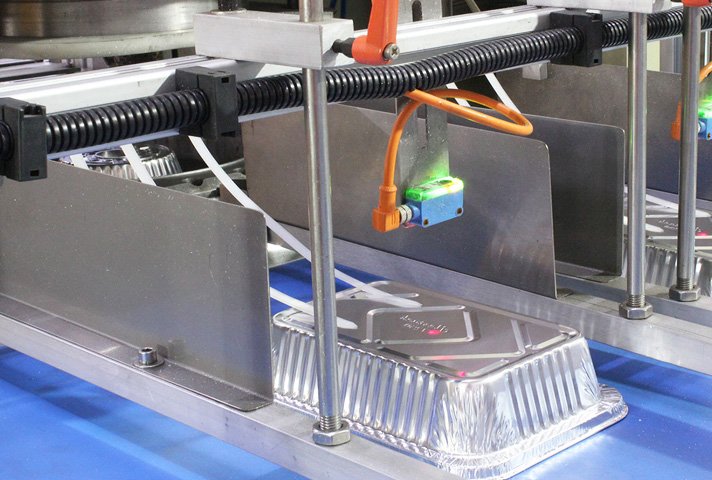
How Are Aluminum Foil Containers Made? The Production Process Step by Step
Today, disposable aluminum foil containers are one of the most popular options for packaging and storing food, thanks to their many advantages. They are widely used in the food and pharmaceutical industries and are seen as an efficient alternative to plastic and paper containers. But how are they made, and what steps turn raw aluminum sheet into high-quality foil trays in many shapes and sizes? In this article we walk through the full aluminum foil container production process and the role of the modern, specialised equipment used by Kimia Pardis Melal.
What is aluminum and why is it used for disposable containers?
Aluminum is a light, strong metal that is abundant in nature; after oxygen and silicon it is the third most common element in the Earth’s crust. Its unique properties make it ideal for disposable food containers:
- Light weight and easy to carry
- Excellent resistance to corrosion and rust
- High thermal conductivity, so food cooks and reheats evenly
- High formability during production
- 100% recyclable without loss of quality
These properties are why disposable foil pans and trays are used so widely in food packaging, pharmaceuticals, restaurants and fast food. To learn more, see our page on aluminum foil containers.
Raw materials needed to make aluminum foil containers
Production starts with high-grade raw material. The most important is aluminum sheet or foil, which usually arrives at the factory in large rolls of a set thickness. The quality of this sheet has a strong effect on the quality of the finished product.
Besides the aluminum sheet, special food-grade lubricants are used. They make rolling and forming smoother and allow the finished containers to be in direct contact with food without affecting its quality.
Rolling: the first stage of production
Rolling is a vital, foundational stage. Thick aluminum sheets pass through a series of rollers and gradually become thinner and wider. Each pass through the rolling mill usually reduces the thickness by up to 50%.
The process needs precise control so the sheet stays uniform and defects such as cracking are avoided. To reduce the load on the work rolls and increase the strength of the sheet, backup rolls are used alongside them. This stage depends heavily on advanced equipment, and Kimia Pardis Melal uses modern machinery to achieve the best rolling quality.
The role of lubricants and thickness control
Lubricants play an important part in rolling. As well as reducing friction between the sheet and the rolls, they cool the sheet and prevent surface damage. Lubricants used for disposable food containers must be approved for food contact so that the final product is safe.
Computerised thickness control measures the reduction in thickness at every moment and adjusts the rolling process. This accuracy means the sheet reaches exactly the standard thickness needed for forming.
How the sheet is prepared for forming
Once rolling is finished and the sheet has reached the target thickness (usually about a 75% reduction from the original), it goes into a special furnace for annealing. Annealing makes the sheet softer and more flexible, ready for shaping.
At this stage food-grade compounds that act as lubricants are also applied to the surface. They make forming smoother, help the containers release easily from the mould and stop food from sticking to the finished tray.
Forming the containers with a press
The final key stage is shaping the sheet with presses. Each press has moulds that set the final shape of the container. Moulds come in single-cavity and double-cavity types; double-cavity moulds produce two containers with each stroke and raise productivity.
Kimia Pardis Melal uses fully automatic machines with advanced moulds that make it possible to produce containers in many shapes with high dimensional accuracy. The presses can also emboss and decorate the containers, making them more attractive and practical.
Essential equipment on a foil container production line
Producing good quality at the right volume needs a range of specialised equipment. The table below lists the most important machines and what each one does:
| Equipment | Main purpose |
|---|---|
| Rolling mill | Reduces sheet thickness and increases width |
| Annealing furnace | Softens the sheet so it is easy to form |
| Press and mould | Forms the containers with high precision |
| Automatic stacker | Collects and stacks finished containers |
| Scrap baler | Compacts scrap and improves material yield |
Benefits of aluminum foil containers for different industries
- Food industry: keeps food fresh and good quality, suitable for the oven, and heat resistant
- Pharmaceutical industry: hygienic, reliable packaging for medicines and medical products
- Restaurants and fast food: easy to transport, good-looking and practical as takeaway containers
- Easy recycling: less environmental harm than plastic containers
What affects the final quality of foil containers?
- Sheet quality: standard thickness and chemical composition
- Accuracy of rolling mills and presses: advanced machinery with precise control
- Mould type and quality: well-designed moulds that prevent forming defects
- Finishing processes: standard lubricants and accurate annealing
- Quality control: continuous testing and inspection at every stage
With precise quality control systems, Kimia Pardis Melal makes sure every container it produces meets the highest quality standards.
Is producing aluminum containers economical?
At first the cost of equipment and raw materials may look high, but the following factors make foil container production a smart, profitable investment:
- Aluminum is fully recyclable, which lowers raw material costs
- Fully automatic lines need very few workers
- Growing demand in the domestic market and for export
- Long-lasting equipment with low maintenance costs
With good management and modern technology, producing disposable aluminum trays can bring steady income and high profitability.
In this article we covered the whole production process of disposable aluminum foil containers, from choosing raw materials and rolling to final forming and the equipment involved. The quality of each step directly affects the result, and choosing a reliable manufacturer and supplier such as Kimia Pardis Melal guarantees that quality and value. For wholesale prices and export, contact our export team.
Talk to our export team
English and Arabic spoken. Send us your products, quantities and destination country and we will reply with prices, availability and shipping options.